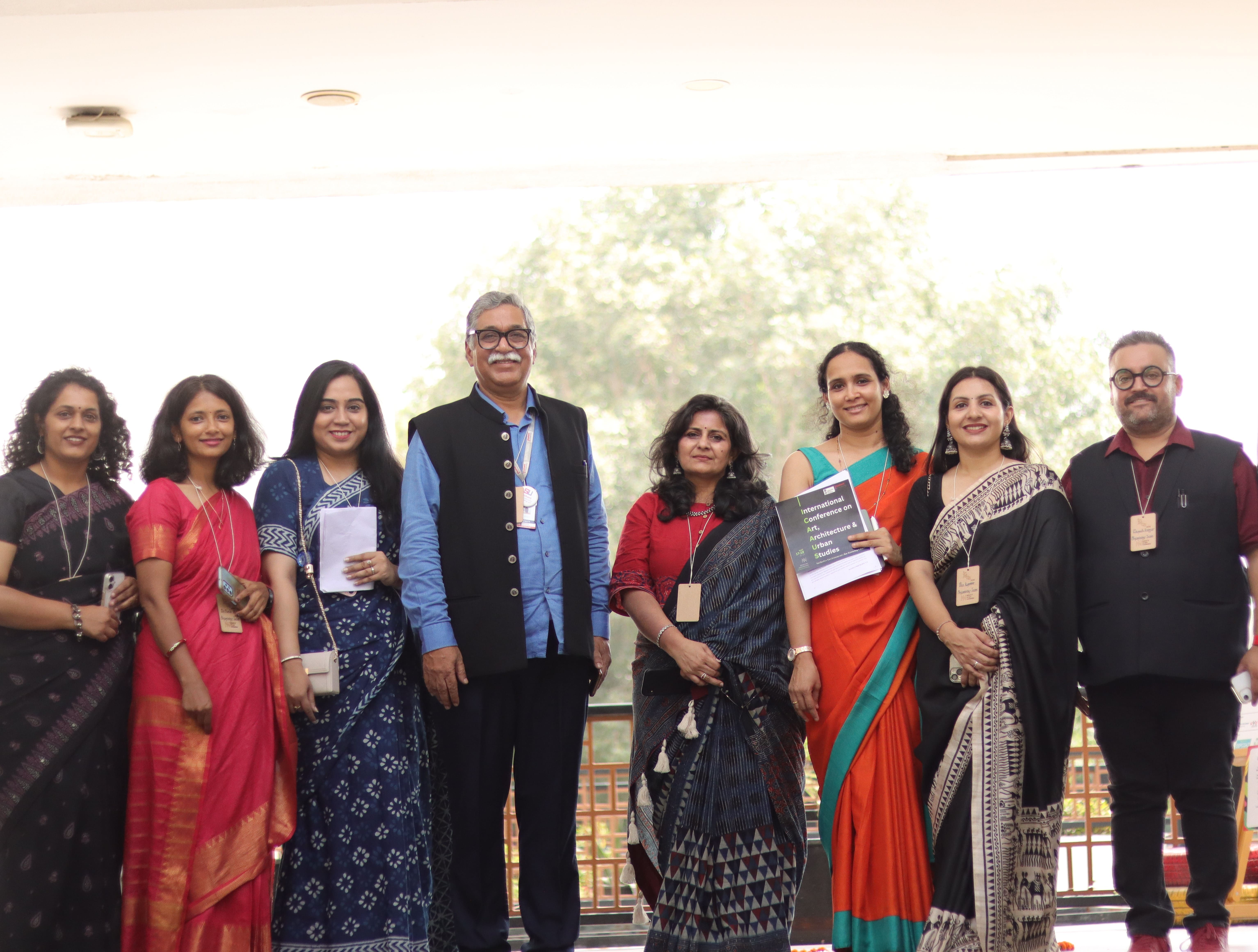
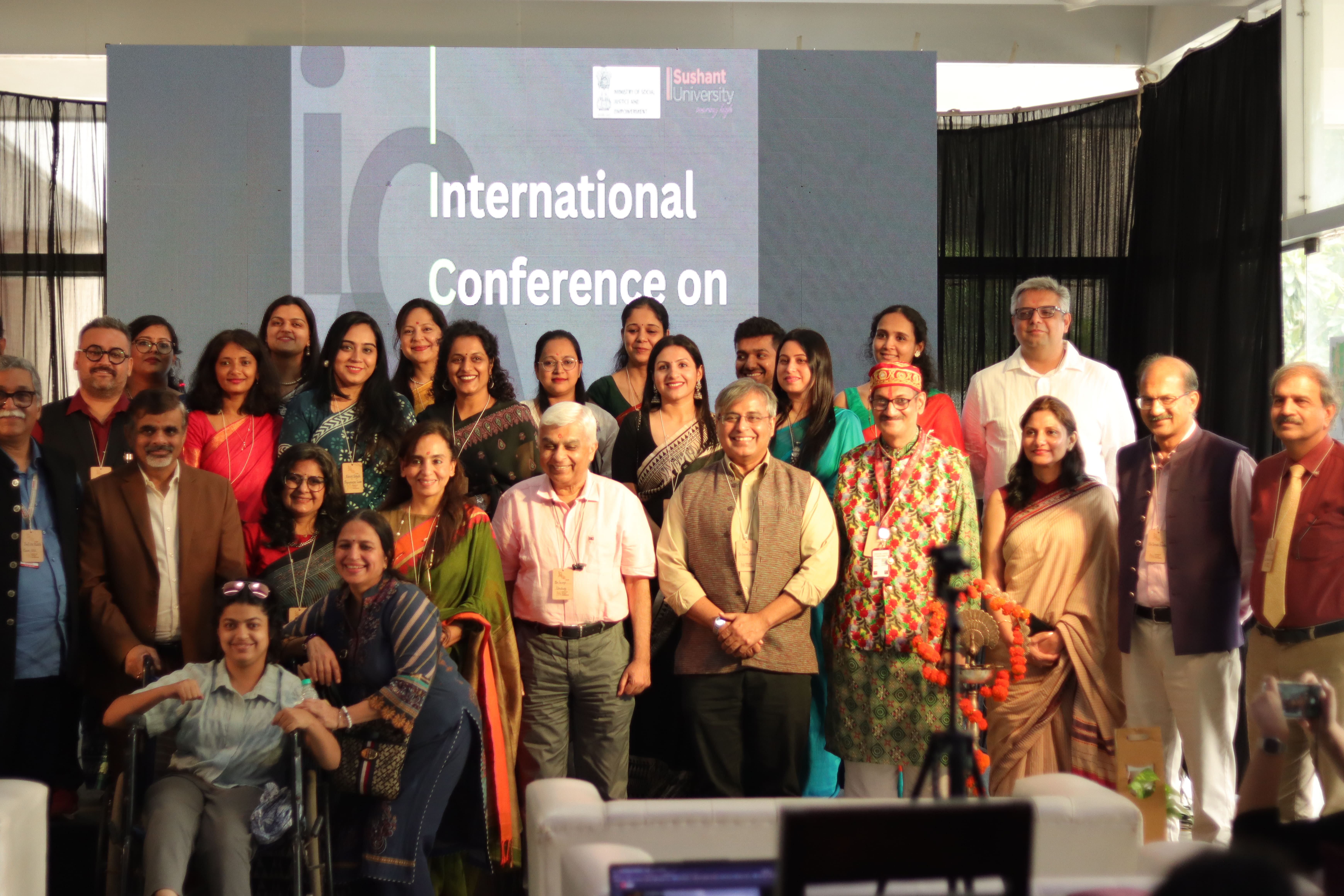
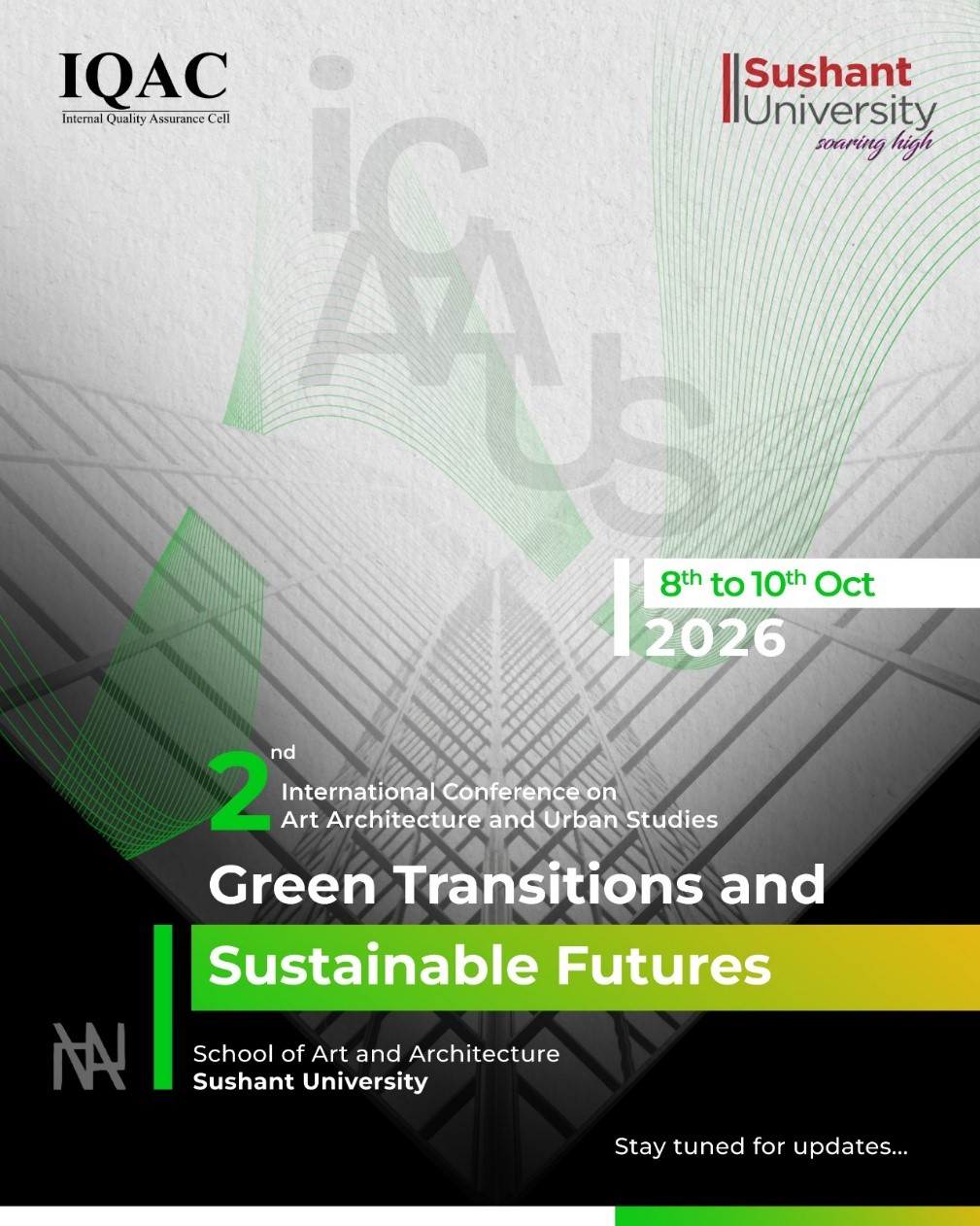
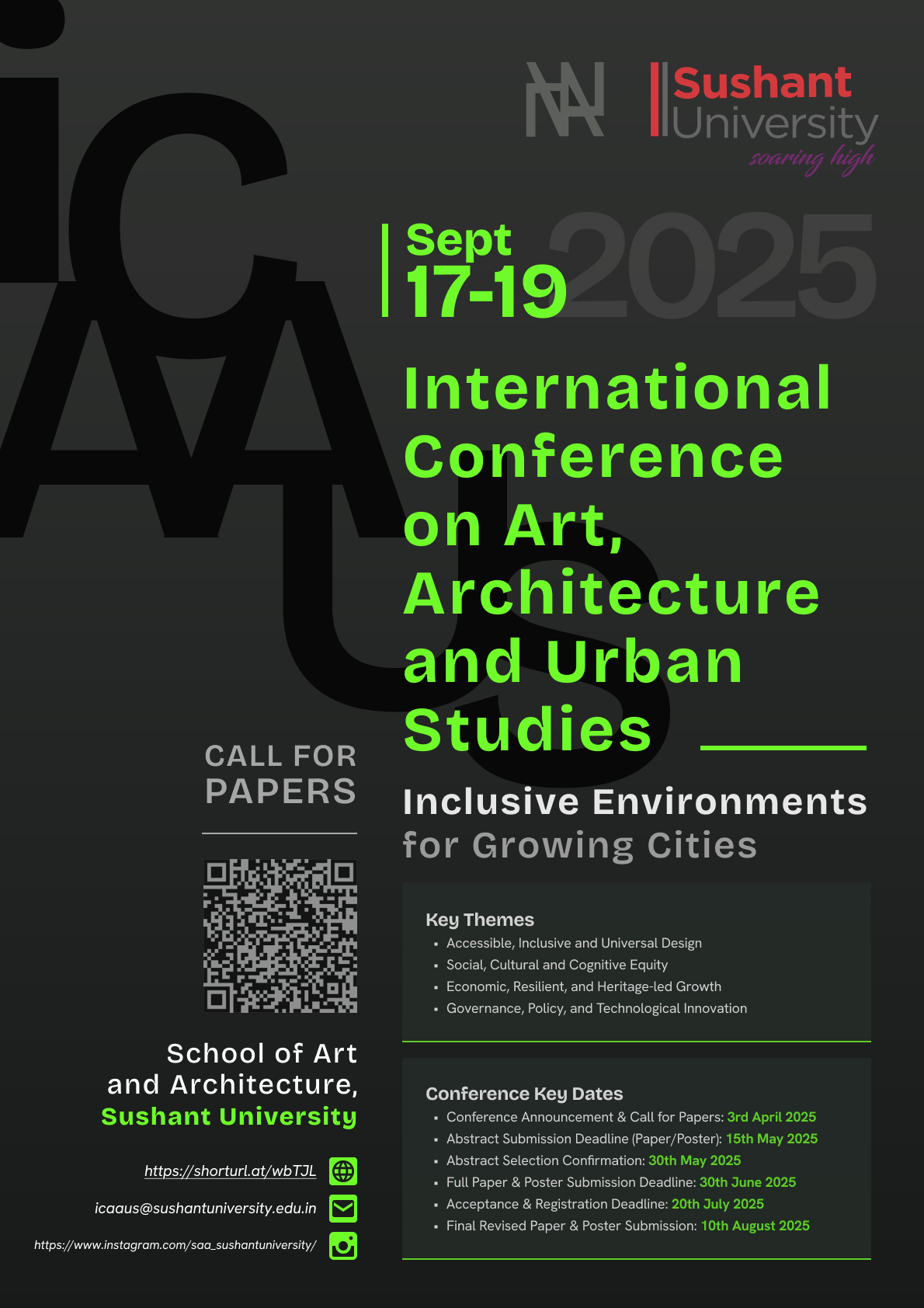
The International Conference on Art, Architecture, and Urban Studies (ICAAUS 2026) is envisioned as a dynamic interdisciplinary platform that brings together scholars, practitioners, policymakers, educators, designers, architects, planners, technologists, and environmental thinkers to collectively explore solutions for a sustainable world. Building on the success of ICAAUS 2025, which focused on Inclusive Environments in Growing Cities, the second edition advances the dialogue with the theme “Green Transitions & Sustainable Futures.”
The International Conference on Art, Architecture, and Urban Studies (ICAAUS 2026) is envisioned as a dynamic interdisciplinary platform that brings together scholars, practitioners, policymakers, educators, designers, architects, planners, technologists, and environmental thinkers to collectively explore solutions for a sustainable world. Building on the success of ICAAUS 2025, which focused on Inclusive Environments in Growing Cities, the second edition advances the dialogue with the theme “Green Transitions & Sustainable Futures.”
This conference seeks to generate actionable knowledge and innovative ideas that contribute to resilient regions, inclusive societies, and regenerative environments. It aligns with global agendas such as the UN Sustainable Development Goals (SDGs 2030) and Net-Zero 2050, while also resonating with India’s national vision of Viksit Bharat @2047—a roadmap toward becoming a developed nation through sustainable growth.
Objectives of ICAAUS 2026
Foster Interdisciplinary Research: Encourage collaboration across architecture, urban planning, art, design, engineering, public policy, and environmental studies to address climate resilience and regenerative systems.
Promote Creative & Artistic Interventions: Highlight the role of art, culture, and design in shaping sustainable development and public awareness.
Advance Regional & Equitable Planning: Explore strategies for balanced growth that address spatial inequities, informal systems, and vulnerable communities.
Encourage Policy Innovation: Provide a platform for new governance frameworks, climate action plans, and green finance mechanisms.
Support Community-led Sustainability Models: Showcase culturally responsive approaches that empower local communities and strengthen inclusivity.
Integrate Technology & Ecology: Discuss technological solutions such as smart grids, digital twins, and bio-based materials aligned with ecological responsibility.
Why This Conference is Important?
Responding to Global Challenges: Climate change, rapid urbanization, and socio-economic disparities demand integrative and transdisciplinary responses. ICAAUS 2026 addresses these challenges by bridging environment, society, and creativity.
Catalysing Sustainable Futures: By focusing on low-carbon mobility, circular economies, and climate governance, the conference contributes to shaping pathways for resilient and regenerative urban systems.
Strengthening India’s Development Vision: The conference directly supports India’s commitment to sustainable built environments, fair urban systems, and climate-responsive growth under Viksit Bharat @2047.
Creating Collaborative Networks: It provides a platform for dialogue, debate, and partnerships across disciplines, fostering knowledge exchange at local, regional, and global scales.
Integrating Culture & Identity: Recognizing that environmental challenges are deeply connected with equity, regional development, and cultural identity, the conference emphasizes culturally grounded sustainability.
The Key Themes:
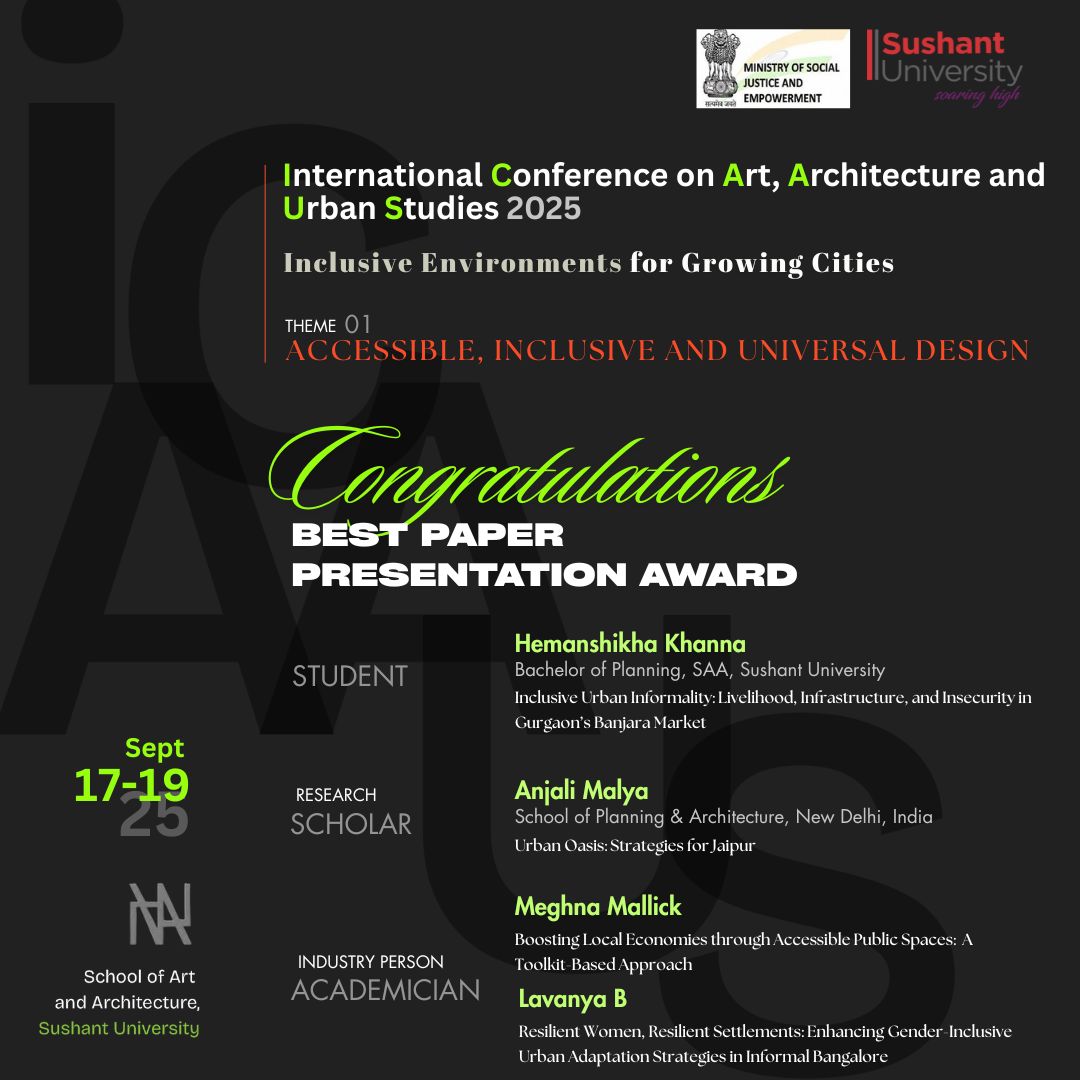
I. Accessible, Inclusive, and Universal Design
Inclusive cities must provide equal access to spaces and resources through thoughtful design and accessibility. A truly inclusive urban environment combines physical, social, and cultural infrastructure to serve all people, regardless of ability, age, gender, or socio-economic background. Rethinking access, mobility, and participation allows cities to become more engaging and fair. As cities evolve, innovative strategies are essential to ensure that no one is left behind, making urban spaces vibrant, adaptable, and socially just. This raises a key question: How can inclusivity drive future urban transformation?
Barrier-Free Environment: Applying universal design principles to improve accessibility in public spaces.
Inclusive Mobility: Strengthening public transportation systems to ensure equal access for all.
Reactivating Public Spaces: Revitalizing urban areas to encourage community interaction and social inclusion.
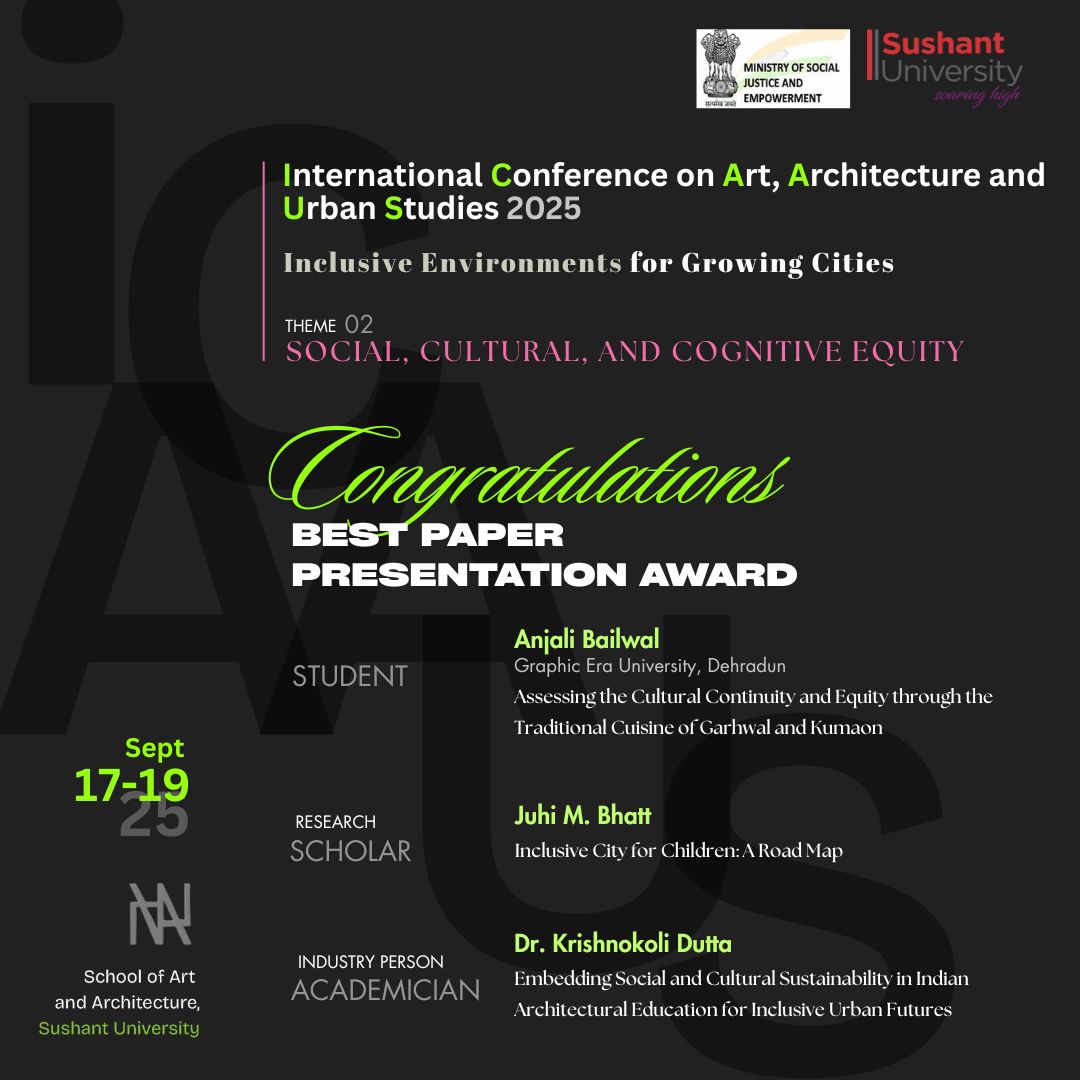
II. Social, Cultural, and Cognitive Equity
Creating truly inclusive cities means ensuring that all communities are represented, valued, and engaged. Social equity involves fair access to opportunities, resources, and safety for all genders and backgrounds. Cultural equity reflects local identity and continuity in urban design, preserving the social fabric while accommodating growth. Cognitive equity ensures that urban spaces are mentally stimulating and supportive of neuro-diverse needs, fostering environments where everyone can thrive. By integrating cultural identity, social representation, and cognitive diversity, cities can empower communities and build resilience in an ever-changing landscape.
Perceived Social Inclusion: Designing safe and inclusive public spaces that support equitable development.
Cultural Continuity and Urban Character: Integrating traditional knowledge and practices into modern urban planning to preserve local identity and strengthen urban character.
Harmonizing Cognitive Ability: Developing spaces that support cognitive diversity and mental well-being through inclusive and culturally sensitive design.
III. Economic, Resilient and Heritage-led Growth
Cities must expand economic opportunities while maintaining social equity and cultural identity. Fair access to jobs, entrepreneurship, and mobility is essential to prevent marginalization and strengthen community bonds. Affordable housing should promote diverse, mixed-use neighborhoods that reflect the social and economic makeup of communities. Resilient urban growth requires balancing economic expansion with environmental adaptability and social fairness. Heritage-led regeneration through adaptive reuse, tourism, and the preservation of local industries can stimulate economic revival while maintaining cultural continuity. How can cities ensure that economic growth benefits everyone and strengthens social cohesion rather than deepening inequality?
Equitable Economic Models: Supporting informal workers, artisans, and marginalized groups through community-driven development and local economic growth.
Heritage-Led Regeneration: Leveraging tourism and adaptive reuse to create economic opportunities while preserving cultural identity.
Resilient Neighborhoods: Designing climate-responsive, inclusive neighborhoods that support diverse communities and withstand socio-economic pressures.
IV. Governance, Policy, and Technological Innovation
Creating fair and future-ready cities requires governance and policies that prioritize inclusivity and resilience. Legal frameworks must protect housing rights, labor practices, and social welfare to prevent deepening inequality. AI and smart technologies offer new opportunities to bridge the digital divide, improving equity and public participation. AI-driven urban planning can support real-time decision-making and resource allocation, making cities more adaptive and responsive. Inclusive governance relies on participatory decision-making, ensuring that all voices—especially marginalized communities—are heard in shaping urban futures. How can governance and technology create cities that are not only technologically advanced but also just and inclusive?
Equitable Urban Policies: Strengthening legal structures to support balanced and inclusive urban development.
AI and Smart Cities: Enhancing digital access and public engagement through AI and technological solutions.
Inclusive Governance: Implementing global best practices to create fair and inclusive urban management.
Language requirement
It is essential for International students to have good proficiency in spoken and written English, as all our programs are taught in English, you are required to provide evidence of passing the qualifying in English.
Have IELTS 6.0 with no sub-score below 5.5 or TOEFL (paper) 550, TOEFL (computer) of 213 or TOEFL (IBT) of 79 scores. Exam results should not be more than two years old.
OR
Candidates without the above pre-qualifications will have to enroll either for Intensive Certificate course in English Language (Full Time) conducted from March to May each year.
Commitee Members
CONFERENCE COMMITTEE
CHIEF PATRON:
Shri J. S Mishra ,IAS (R), Hon’ble Chancellor, Sushant University
PATRONS:
(Dr.) Rakesh Ranjan, Hon’ble Vice Chancellor, Sushant University
Sanjeev Sharma, Hon’ble Pro Vice Chancellor, Sushant University
CONFERENCE CHAIRS
Prof. (Col.) V.K Malik, Dean SAA, Sushant University.
Prof. (Dr.) Navin Piplani, Director SAA, Sushant University
CONVENER of the CONFERENCE:
Pooja Lalit Kumar, Head Accreditation and Rankings, SAA, Sushant University
SCIENTIFIC COMMITTEE:
Prof. (Dr.) Navin Piplani, Director SAA, Sushant University
Prof. (Dr. ) T.S. Brar, HOD DoPAR, SAA, Sushant University
Prof. (Dr.) Suruchi Modi, HOD DoA, SAA, Sushant University
Prof. Aruna Bhardwaj, Head, Research Cell, SAA, Sushant University
Prof. Pooja Lalit Kumar, Head Accreditation and Rankings, SAA, Sushant University
ORGANISING SECRETARIAT
Asst. Prof. (Dr.)Purva Manjumdar
Asso. Prof. Deepak Kumar ( Treasurer)
Asso. Prof. Sourav Banerjee
Asso. Prof. Shanu Jain
Asso. Prof. Kiran Singh
Asst. Prof. Ria Kapoor
Registration Form
Closed
Contact
For further information or any query, please write to us at :
icaaus@sushantuniversity.edu.in
Important Dates
Hosted by: School of Art and Architecture, Sushant University
Conference Dates: 17–19 September 2025
Important Dates
Conference Announcement & Call for Papers Opens: 3rd April 2025
Abstract Submission Deadline (Paper & Poster): 15th May 2025
Extended Abstract Submission Deadline (Paper & Poster): 15th June 2025
Abstract Selection Confirmation: 30th June 2025
Full Paper & Poster Submission Deadline: 15th July 2025
Acceptance & Registration Deadline: 25th July 2025
Final Revised Paper & Poster Submission: 10th August 2025
Join us in shaping the dialogue on inclusive, sustainable, and resilient urban environments!
Qualification Requirement
Admissions are in conformity with the guidelines set by the Association of Indian Universities and the Statutory Bodies of India like the All India Council for Technical Education, Bar Council of India, etc.
Only candidates who have the requisite qualification from foreign universities or Boards of Higher Education accredited and recognized by the Association of Indian Universities (AIU), Govt. of India, New Delhi are eligible to apply at Sushant University for admission.
If required, candidates will be asked to obtain the ‘eligibility certificate/equivalency certificate’ from Association of Indian Universities (AIU), New Delhi on the given below address.
Click on: Recognized Boards &Universities
Association of Indian Universities
AIU House, 16 Kotla Marg,
New Delhi – 110 002
Tel. No. +91 – 11 – 23230059
Fax No. +91 – 11 – 23232131
Email: info@aiuweb.org
Registration Fee
Registration Fee for Submission Paper Submission 1. Students: ₹3,000 2. Research Scholars: ₹4,000 3. Academia/Industry Professionals: ₹6,000 4. International Participants: $350 Poster Submission 1. Students: ₹1,500 2. Research Scholars/Academicians: ₹2,000 3. International Participants: $350
We are excited to invite researchers, academicians, and professionals to contribute to the 1st International Conference on Art, Architecture, and Urban Studies (ICAAUS 2025) on "Inclusive Environments in Growing Cities" under the Sugamya Bharat Abhiyan.
Hosted by: School of Art and Architecture, Sushant University
Conference Dates: 17–19 September 2025
Accommodation
Most students experience living with others at some point during their studies. It can be an amazing time in your life and you can end up making friends for life. However, there are a few guidelines you should follow if you want to ensure a harmonious and relaxed living situation. Click here for Hostel Link
The Campus Residence fee structure for 2020
Particulars
Indian Student INR
SAARC Nationals INR
Foreign Nationals / NRI US$
Hostel Fee
1,57,500
1,57,500
3,182
Refundable Deposit
15,000
15,000
304
Admission fee
5,000
5,000
101
Total
1,77,000
1,77,000
$ 3,588
Please note:
This is an annual fee for availing the hostel which includes accommodation, meals and snacks.
You are required to apply for your spot in a separate form.
All our Residences are triple AC sharing rooms.
Hostel Fee payments in full needs to be done along with First semester academic fee.
Students are required to apply for Residence spot every year.
All Residence rules and Regulations will apply.
Lateral Entry / Migration
If you are currently enrolled in another recognized educational institution in India, and if you wish to pursue your studies with us we offer a variety of services to help you in the admissions process. For example you may have completed the first year of a degree at another university and want to study at Sushant University. Or you may have completed a diploma, professional or vocational qualification and want to transfer this credit to Sushant University.
For transfer policy and eligibility requirements please mail us: admissions@sushantuniversity.edu.in
Resources
FAQs
Frequently Asked Questions (FAQs) – ICAAUS 2025
General Information
Q1: What is ICAAUS 2025?
ICAAUS 2025 is the 1st International Conference on Art, Architecture & Urban Studies, organized by the School of Art & Architecture, Sushant University. This conference aims to foster discussions and innovations around Inclusive Environments in Growing Cities.
It aligns with:
Sugamya Bharat Abhiyan (Accessible India Campaign)
United Nations Sustainable Development Goals (SDGs)
SDG 5 – Gender Equality
SDG 10 – Reduced Inequalities
SDG 11 – Sustainable Cities and Communities
Q2: When and where will the conference take place?
ICAAUS 2025 will be held from September 17 to 19, 2025, in a hybrid format:
September 17, 2025 – Offline at School of Art and Architecture, Sushant University, Gurugram, India
September 18-19, 2025 – Hybrid (Online & Offline sessions available)
Q3: What are the key themes of the conference?
Participants can submit abstracts under the following broad themes:
Accessible, Inclusive, and Universal Design
Social, Cultural, and Cognitive Equity
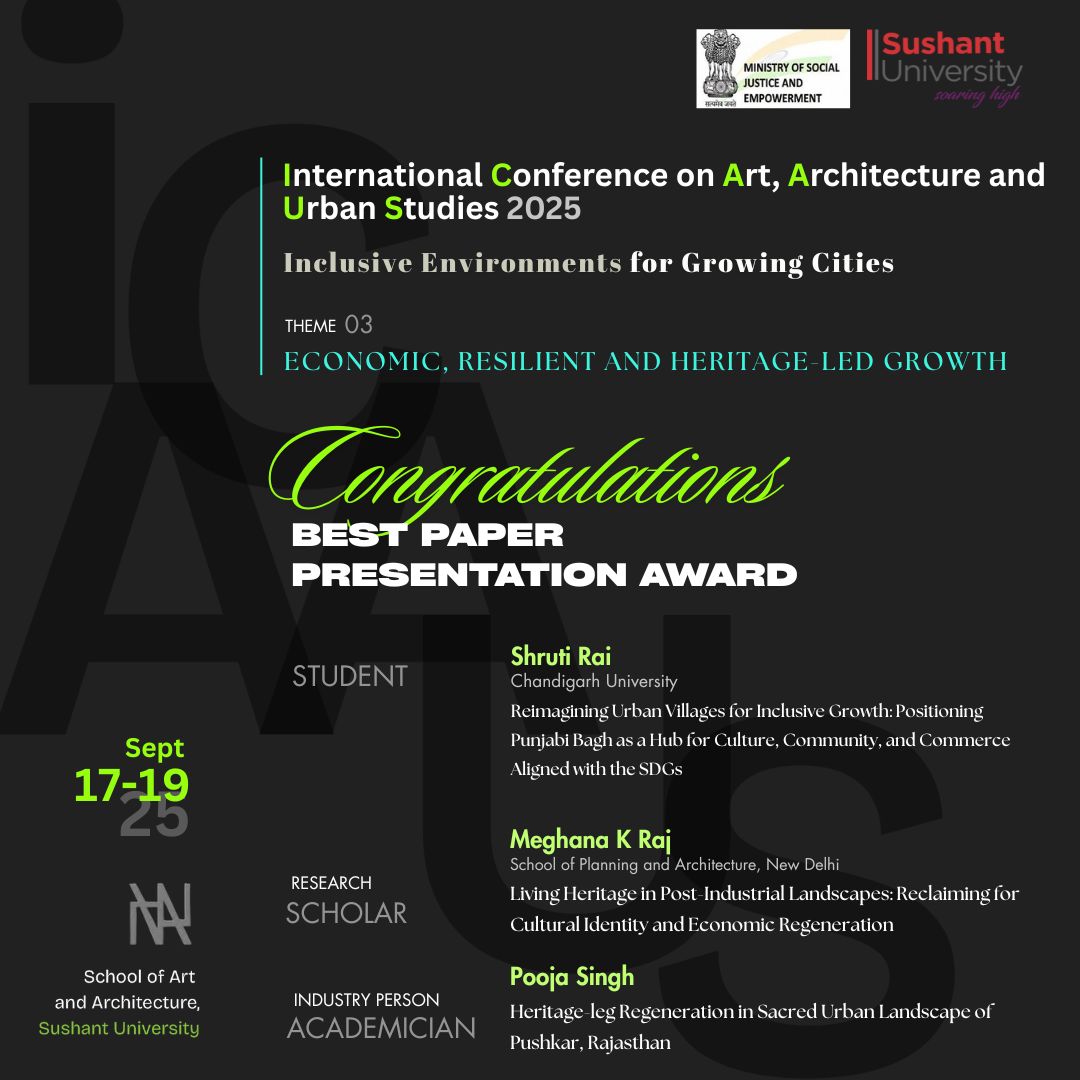
Economic, Resilient, and Heritage-led Growth
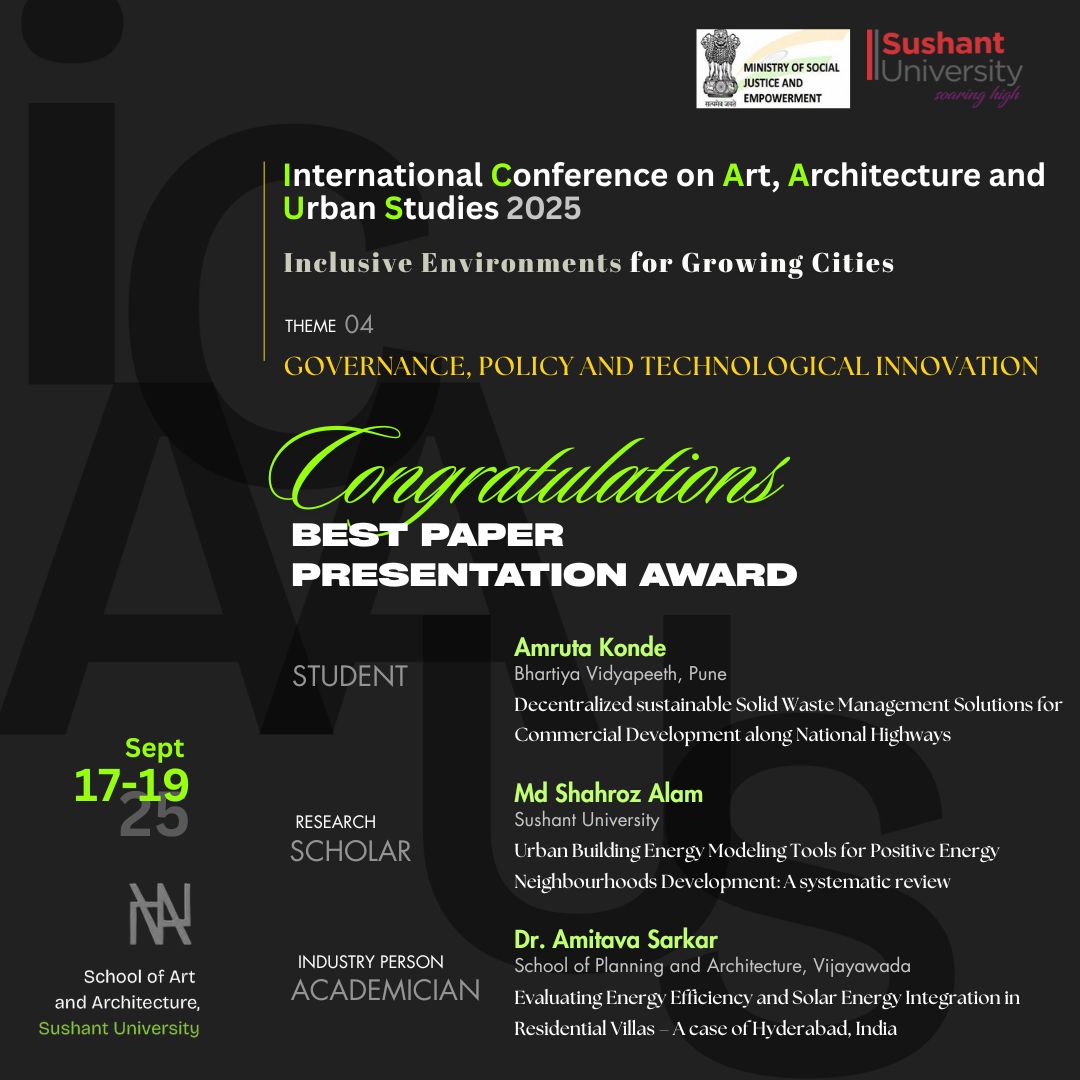
Governance, Policy, and Technological Innovation
For detailed sub-themes, visit the official conference webpage: [Insert Webpage Link]
Call for Abstracts & Submissions
Q4: How can I submit my abstract?
Abstracts can be submitted through the Call for Abstracts Google Form, available on the official conference webpage:
Q5: What is the deadline for abstract submission?
The deadline for abstract submission is [Insert Deadline]. Late submissions will not be considered.
(Refer to the Important Dates section on the webpage for updates.)
Q6: Can I submit more than one abstract?
Yes, multiple abstracts can be submitted. However, each submission must be unique and relevant to the conference themes.
Q7: Is there a word limit for the abstract?
Yes, abstracts must be 250–300 words in length.
Q8: Will my paper be published?
Yes! The following publication opportunities are available:
All accepted abstracts (papers & posters) from registered authors will be published in the ‘Book of Abstracts’.
Full papers submitted by the deadline will be considered for publication in Scopus-indexed/Springer journals as part of the conference proceedings.
Selected papers will be published in a Special Issue of reputed journals.
Registration & Fees
Q9: How can I register for the conference?
Registration will be available on the official conference website once the registration portal opens. Stay tuned for updates.
Q10: Is there a registration fee?
Yes, a nominal registration fee applies to both presenters and attendees. The fee structure will be available on the registration page.
Q11: Do co-authors need to register separately?
Yes, each co-author attending the conference must register separately. However, only one author is required to present the paper.
Conference Participation & Logistics
Q12: Can I attend the conference without presenting a paper?
Yes! Anyone interested in learning, networking, and engaging with experts can register as a participant without submitting a paper.
Q13: Will the conference provide certificates?
Yes!
Presenters will receive e-certificates upon successful presentation.
Attendees will receive e-certificates for participation.
Q14: Will there be an online participation option?
Yes! The conference will be hybrid, allowing online participation for international and remote attendees:
Day 1 (September 17, 2025) – Offline at Sushant University, Gurugram