Bachelors of Architecture
A 5- year undergraduate programme offered by School of Art and Architecture which is one of the renowned institutes in India and worldwide, offering architecture education which is innovative, forward looking and competitive with global standards. Since 1989, when the school was established we have 1500+ graduates who are leading professionals in architecture, planning, design, and other associated fields.
Eligibility Criteria
1. Academic Qualifications
Candidates must satisfy at least one of the following educational criteria:
10+2 Scheme: Passed or appearing in 10+2 with Physics and Mathematics as compulsory subjects, plus one of the following: Chemistry, Biology, Computer Science, Information Technology, Engineering Graphics, Business Studies, or Technical Vocational subjects. 10+3 Diploma: Passed or appearing in a 10+3 Diploma Examination with Mathematics as a compulsory subject.
2. Mandatory Aptitude Test
No candidate can be admitted to a B.Arch course unless they have passed a recognized aptitude test in architecture. Students must qualify for the NATA (National Aptitude Test in Architecture) conducted by the COA, or JEE Main
Course Description
Being one of the best B Arch Colleges in India, SU offers a five year undergraduate programme in Architecture that aims at attaining a high level of excellence in architectural design, supported by lateral inputs from other subjects. The students are exposed to a wide range of regular subjects and elective courses to equip them with the knowledge and skills required to deal with the regional, climatic, economic, technological and socio-cultural diversity of India, and the need for evolved solutions that are unique to their context.
- To stimulate sensitivity and unveil creative talents
- To reinforce intellectual capabilities and develop proficiency in professional skills to enable graduates to completely pursue alternative careers within the broad spectrum of architecture
- To provide opportunities to students to try out the role they will eventually play as responsible members of society under supervision and interactive guidance
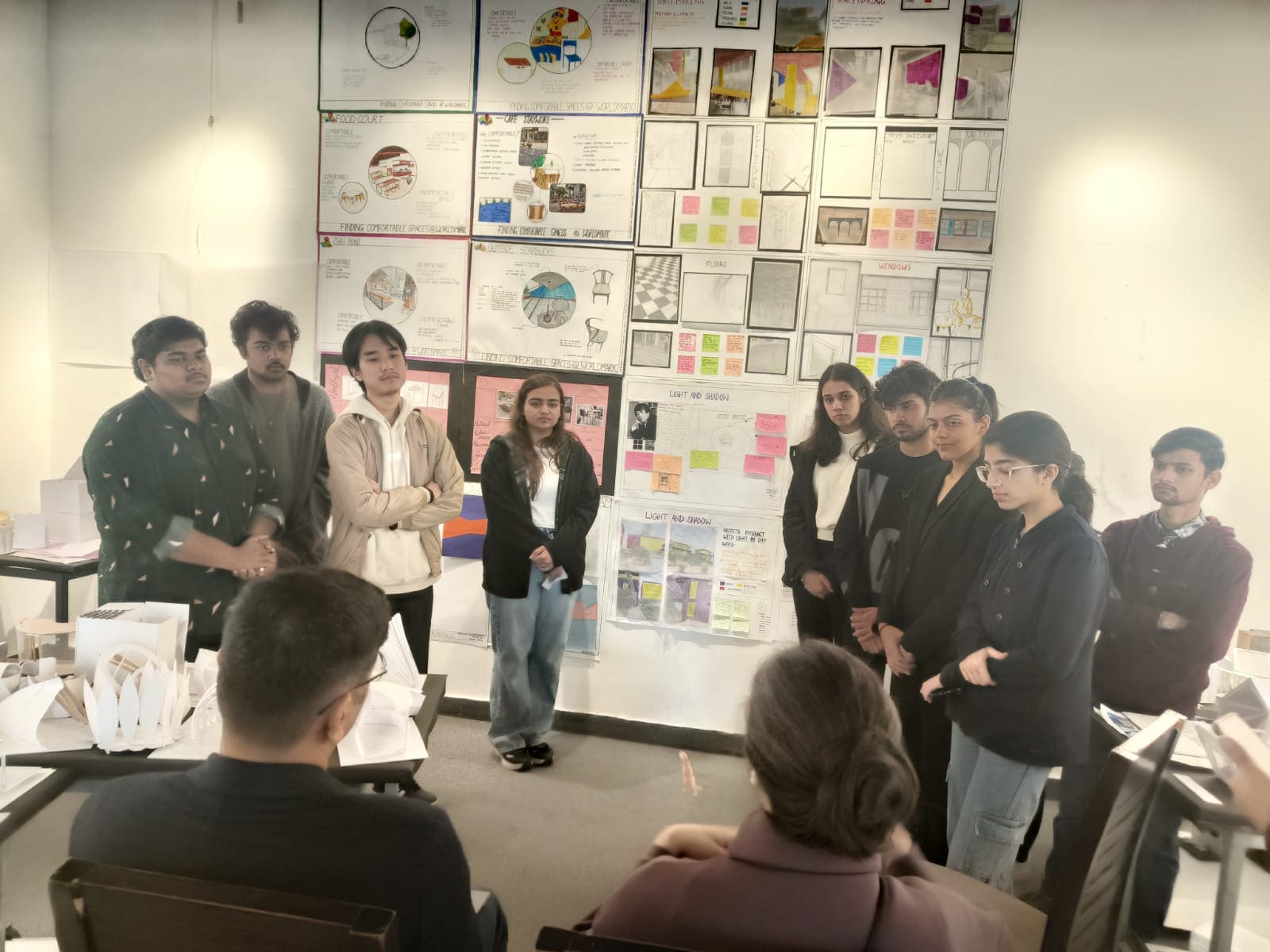
Each year of study at the school concentrates on a thematic base, addressed programmatically in the design studio and supported by theoretical understanding and related technological knowledge. Rural and urban settlement, social housing, community structure and cultural fabric, urban process and architecture of the city are some of the themes, connected with each other at various levels of the five year of study. The three pillars of sustainability (environmental, social and economic) form the underlying principle of learning at the school: a common thread through the years. To deviate from other B Arch Colleges in Delhi, students are encouraged to develop their individual design approach with an understanding of making of architecture through the analysis of history of ideas, theories and cultural agendas, which constitute the base for an architectural outcome of a particular time. Faith in creative architecture thereof gets linked with the historical continuum in order to reinforce the process of introspection.
The First year
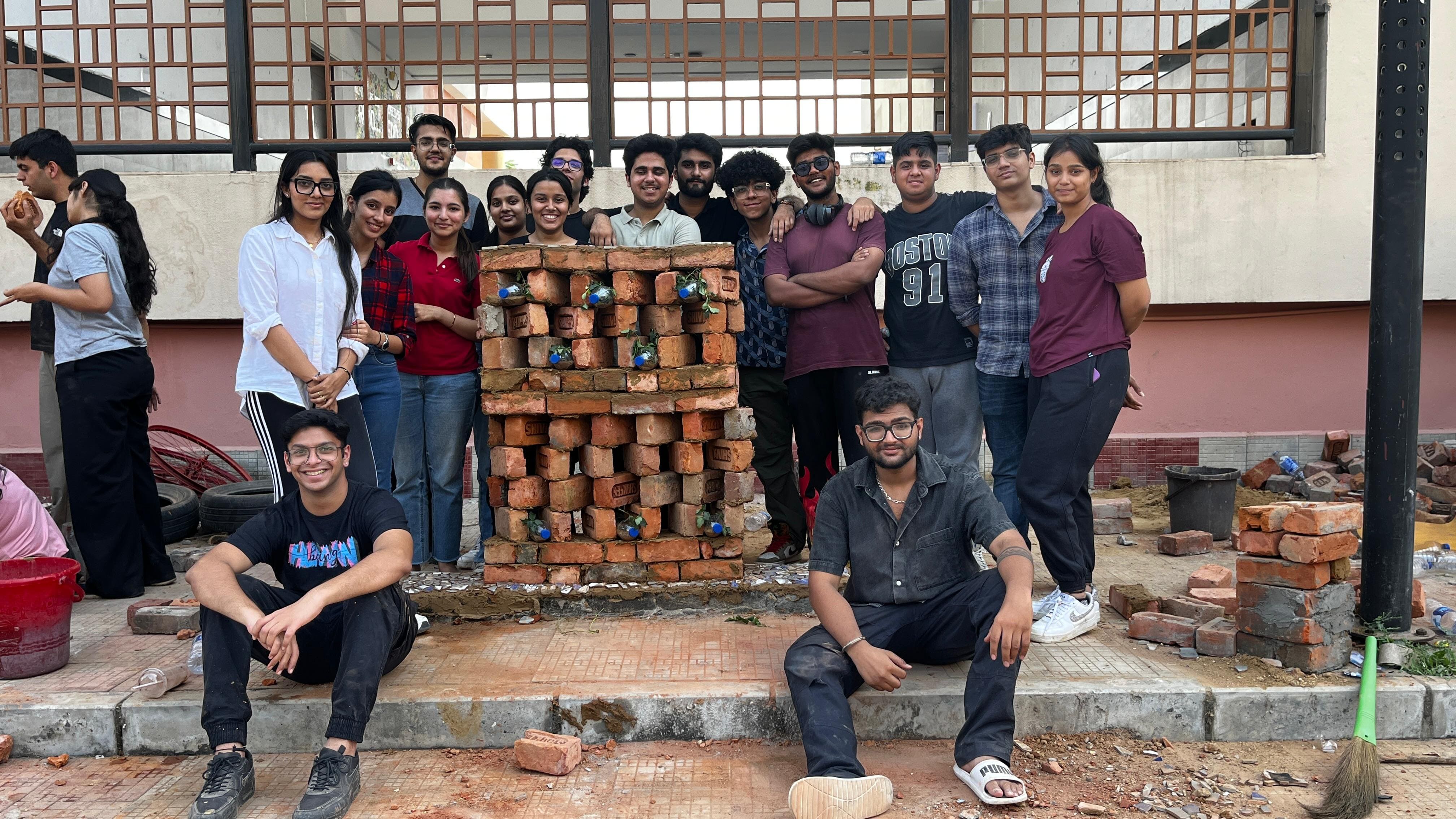
The first-year curriculum is structured around comprehensive, hands-on studios and foundational theoretical courses spread across two semesters. The first-year curriculum is anchored by core design and technical studios, including Design Studio 1 (Spatial Design), Design Studio 2 (Environmental Studio), and Building Construction, Materials and Systems Studios 1 and 2. Practical and representational skills are developed through Architectural Representation 1 and 2 alongside Art and Art Appreciation 1 and 2. Providing critical context to these studios are the theoretical and structural courses: Structural Systems 1 and 2, History, Theory and Criticism 1 and 2, Environmental Studies, and Sustainable Approaches 1 (Environment) and 2 (Cultural).
The Second year
The second-year curriculum builds directly upon the foundational skills of the first year, expanding into specialized design typologies, technical systems, and professional electives across both semesters. Continuing from the first year, the second-year curriculum advances into specialized studio work featuring Design Studio 3 (Experiential Design), Design Studio 4 (Retrofit Design), and Building Construction, Materials and Systems Studios 3 and 4. Representational and expressive skills are further refined in Architectural Representation 3 and 4 and Art and Art Appreciation 3 and 4. This studio work is deeply integrated with technical and contextual theory courses, including Structural Systems 3 and 4, Building Services 1 - M.E.P., History, Theory and Criticism 3 and 4, and Sustainable Approaches 3 (Social) and 4 (Economic). Additionally, students begin customizing their academic pathway through Discipline Specific Electives 1 and 2.
The Third year
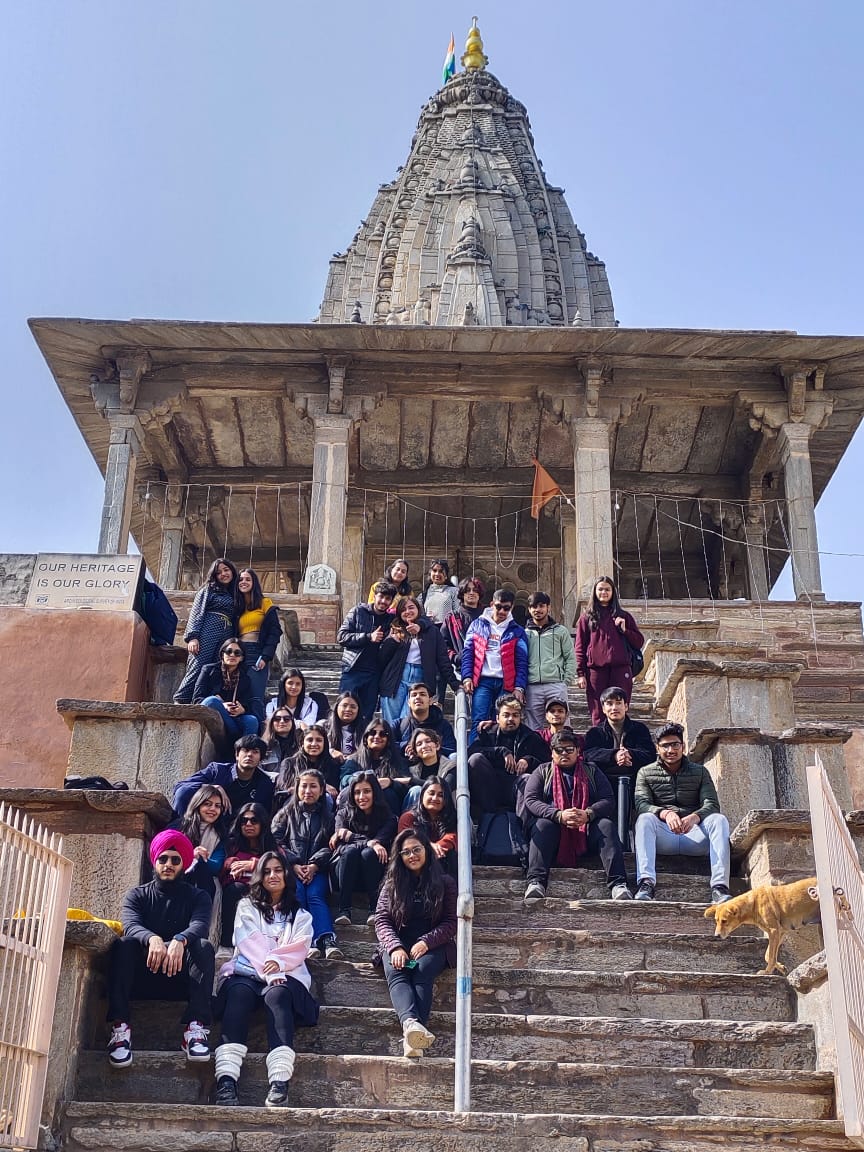
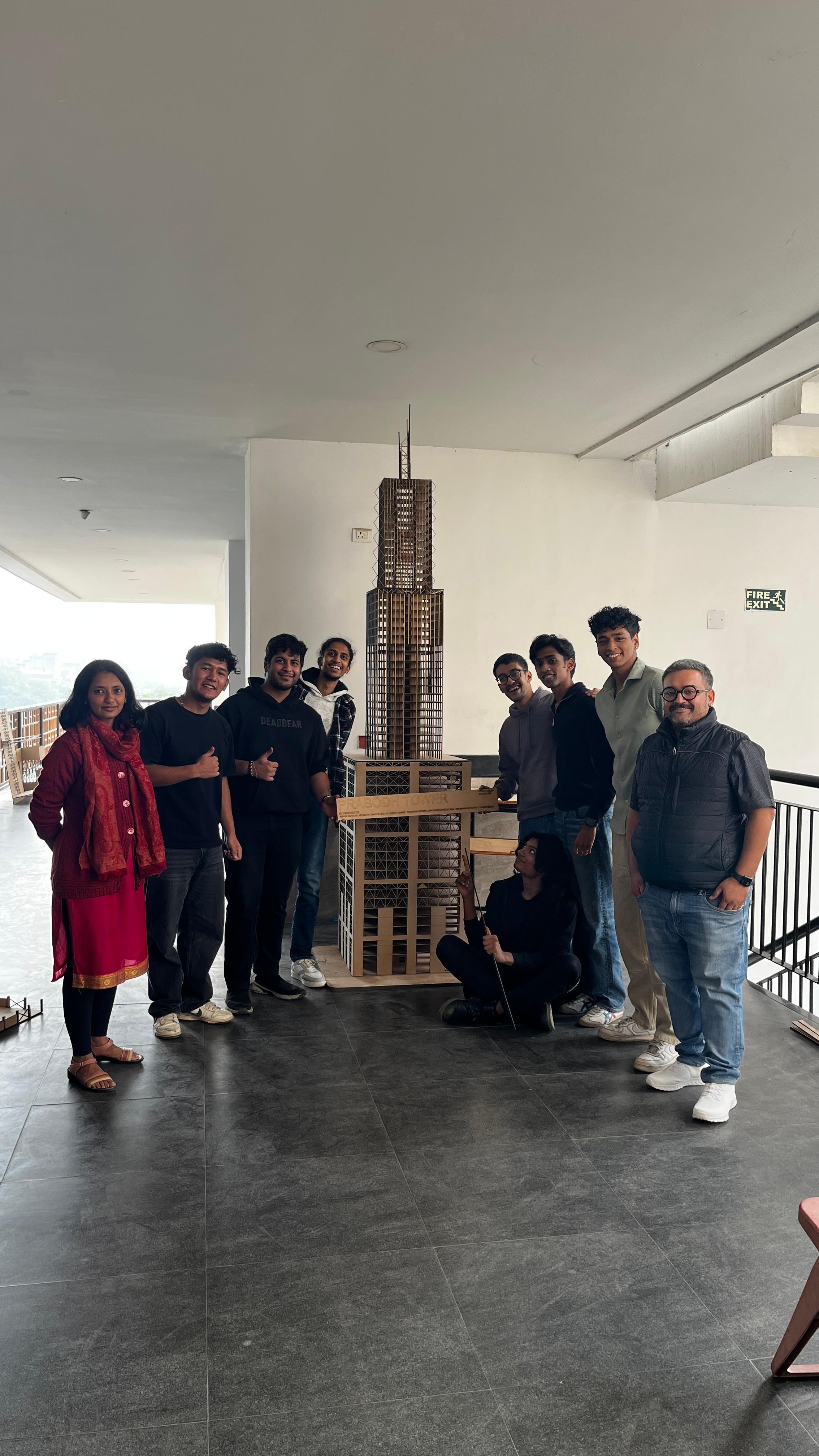
The third-year curriculum introduces advanced technical synthesis, computational labs, and specialized professional management skills across both semesters. The third-year curriculum scales up to complex, high-performance architecture with Design Studio 5 (Responsive Habitats) and Design Studio 6 (Innovating the High Rise), tightly paired with Advancing Design Lab 1 and 2. Core technical competencies are advanced through Building Construction, Materials and Systems Studios 5 and 6, Structural Systems 5 and 6, and specialized mechanical systems in Building Services 2 (HVAC) and Building Services 3 (Fire Fighting and Advancements). Professional and research foundations are established through Estimation and Specification and Academic Writing, Research Methods and Ethics, while creative expression culminates in Art and Art Appreciation 5 (Creative Project). Finally, specialized tracks are introduced through Discipline Specific Electives 3 (Traditional Knowledge Systems) and 4 (Heritage Studies).
The Fourth year
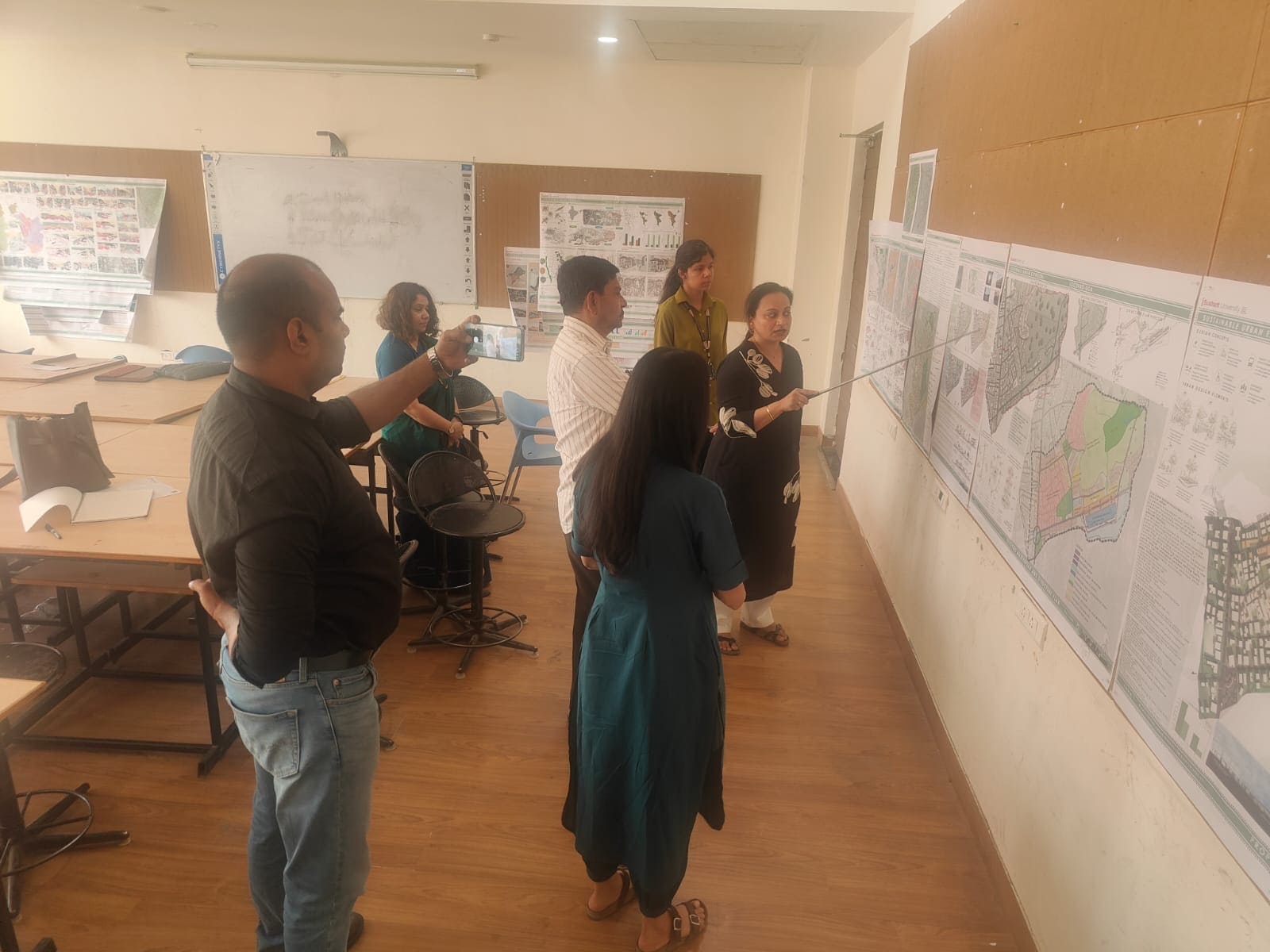
The fourth-year curriculum transitions into urban-scale complexities, professional office management, and real-world community engagement. The fourth-year curriculum shifts focus toward macro-scale interventions and professional readiness, anchored by Design Studio 7 (Urban Lab) and Advancing Design Lab 3. Core technical coordination culminates in Building Construction, Materials and Systems Studio 7, which runs alongside Project Documentation, Professional Practice and Ethics. Students prepare for the transition into the industry through Entrepreneurship and Career Planning, Community Service, and General Elective 2 (MOOC), which complements their Practical Training. Contextual expertise is further rounded out by Discipline Specific Elective 5 (Land Management and Governance).
The Fifth year
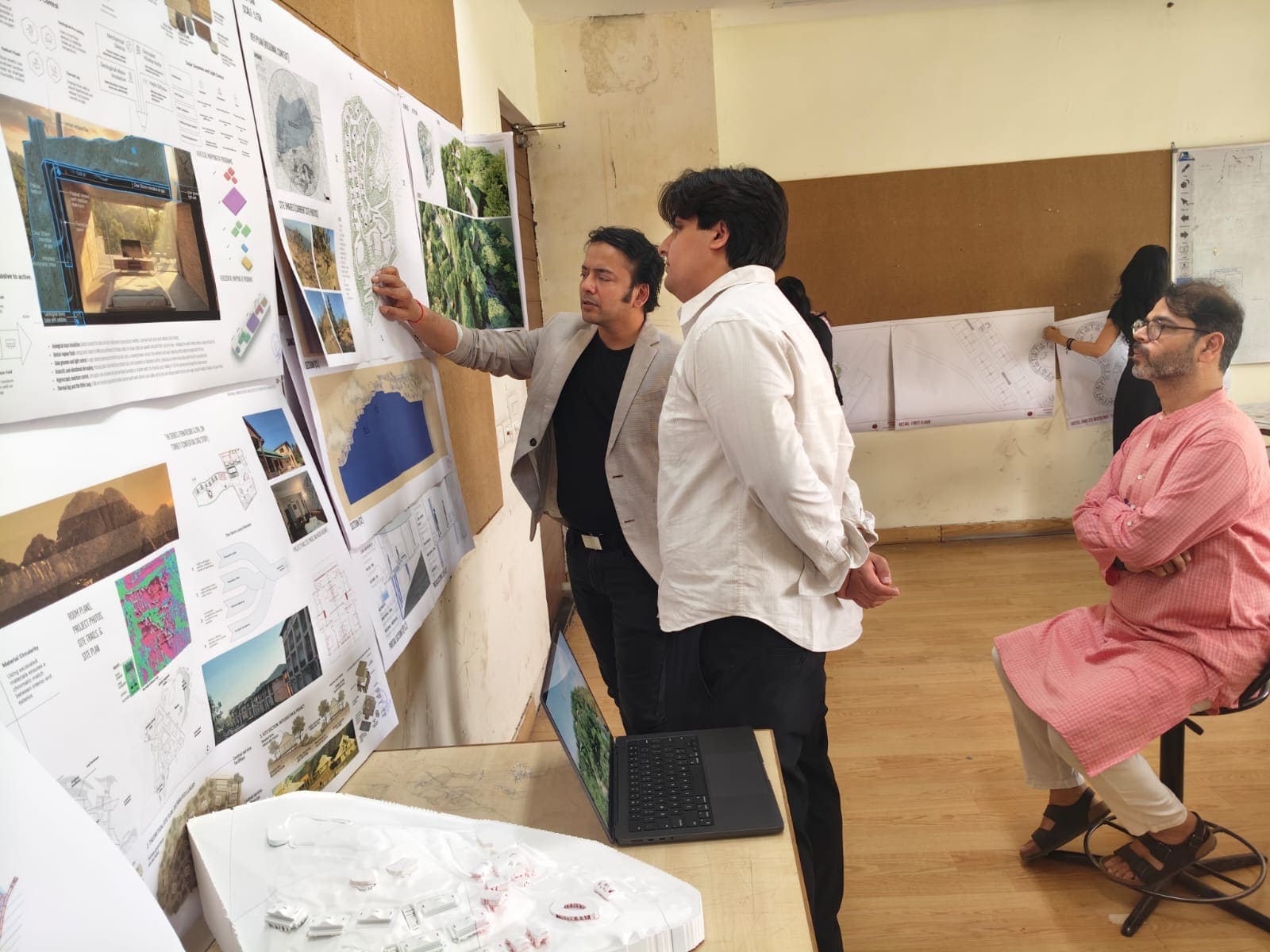
The fifth-year curriculum serves as the academic capstone, shifting focus toward deep academic research, macro-scale urban environments, and the comprehensive preparation and formulation of the final architecture thesis. The fifth-year curriculum serves as the ultimate academic capstone, steering students into advanced research and macro-scale design through Design Studio 8 (Urban Lab). Intellectual and academic synthesis is driven by a heavy research core consisting of the Dissertation, Thesis Formulation, and the Architecture Thesis Seminar, which collectively prepare students for their terminal design execution. This intensive academic track is theoretically supported by Discipline Specific Elective 6 (Urban Studies) and rounded out through independent learning via General Elective 2 (MOOC).
Total seats available
80